



The best AI knows when not to use the cloud. For years, that was not how it worked. You sent everything to a server and hoped for the best. Perplexity just changed that equation.
At Computex 2026 in Taipei, CEO Aravind Srinivas and Intel CEO Lip-Bu Tan announced Hybrid Agentic Inference for Perplexity Computer.
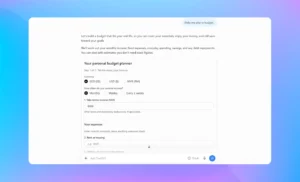
The system reads each task, keeps your sensitive data on your device, and only sends what genuinely needs cloud power to the cloud. No settings. No manual choices. Just a smarter way to work. The AI makes the decision, you get the answer, and once you see how it works, the significance becomes clear.
What Is Hybrid Agentic Inference?
Hybrid Agentic Inference is a system that decides where each AI task should run. Instead of sending everything to the same place, it looks at the job, breaks it into smaller pieces, and sends each piece to the right model.
In practice, this means:
- Personal records and sensitive information remain under your control.
- Simple requests complete faster through local processing.
- Complex reasoning moves to larger cloud models.
- Everything combines into one unified output.
You never decide where processing happens. The system handles that automatically, every time.
Perplexity describes the compact local model as a traffic controller. It figures out which information is sensitive enough to stay on the device and which tasks need the full power of a cloud frontier model.
The Problem Perplexity Is Solving
Here’s the thing. Cloud AI is powerful, but it requires sending your data to remote servers. Local AI protects privacy but hits hardware limits quickly. This is what developers call an orchestration challenge.
The hard part is not finding a powerful model. The hard part is knowing which model should handle each task and when. As AI gets better, making that call correctly matters just as much as the model itself. That is exactly the problem Hybrid Agentic Inference is built to fix.
Why the Timing Makes Sense
Modern computers now carry dedicated AI processors, and new chip architectures have made local inference far more practical than even two years ago. People are also paying closer attention to where their data goes.
Perplexity put it simply: users would rather own a data centre inside their laptop than rely on infrastructure they cannot control.
The benefits break down like this:
- Better Privacy: Sensitive data stays on the device and only leaves when necessary.
- Faster Responses: Simple tasks run on your device, not the cloud. You get answers faster.
- Lower Costs: Everyday tasks stay on your device. Cloud usage drops. So do the costs.
- Smarter Allocation: Cloud models get reserved for workloads that genuinely need the extra power.
Built With Intel, Compatible Across Platforms
Perplexity teamed up with Intel to show off Hybrid Agentic Inference at Computex 2026, running it live on Intel Core Ultra Series 3 processors. The company also confirmed support for NVIDIA’s RTX Spark platform, an AI-focused architecture built to run advanced workloads locally on personal computers.
The system works across different chips and platforms, not just one brand. That matters because a system locked to one ecosystem will always have a limited audience. One that runs on any hardware can reach almost anyone.
How It Stacks Up Against Apple, Google, and Microsoft
Perplexity is not alone in this space.
- Apple combines on-device processing with Private Cloud Compute through Apple Intelligence.
- Google runs Gemini Nano locally alongside larger cloud Gemini models.
- Microsoft launched Foundry Local in April 2026. It lets you run AI fully on your device, no cloud connection needed, and it works on Windows, macOS, and Linux.
The common thread is clear. AI is moving closer to the device. What Perplexity is claiming is automatic coordination within a single workflow. The system routes each step dynamically, without users choosing which model handles a task or developers configuring every stage manually. That is the key differentiator.
Who Actually Benefits?
The biggest beneficiaries are not tech enthusiasts. They are professionals handling sensitive information every day.
Picture a freelance accountant sitting down with a client’s financial statements. Or a lawyer reviewing a confidential agreement. Or a doctor going through patient records. Privacy is not an extra feature in any of these cases. It is the starting point.
For these users, it has always been a tough call. Protect your data or use powerful AI. Hybrid Agentic Inference takes that choice off the table.
Here is how a typical workflow looks. AI reads local files. Sensitive data never leaves the device. Only the tasks that need cloud power go there. The final answer comes back as one complete response. For professionals with data they cannot afford to expose, that matters a lot.
When Does It Arrive?
Perplexity has confirmed that Hybrid Agentic Inference will begin rolling out to Perplexity Computer in July 2026. Complete hardware requirements and device compatibility details have not been announced yet.
Final Thoughts
Perplexity is challenging an assumption that has shaped AI development for years. That serious AI work belongs in the cloud.
When devices lacked the hardware to keep up, that assumption was reasonable. It is a harder case to make now. Dedicated AI chips are showing up in everyday PCs, and users are growing more selective about where their data travels.
Hybrid Agentic Inference responds to both of those changes. The technology still needs to show what it can do after launch, but the foundation is solid, and the timing works in its favor.
The next phase of AI might not be a choice between local and cloud. It might be systems capable enough to make that call on their own. If Perplexity gets the July rollout right, that future gets here faster than most people are expecting.