


Have you ever watched a film and walked away thinking games do not come close visually? A lot of people feel exactly that way. That gap has stuck around for years with no real fix in sight. NVIDIA has been putting in the work to change that for a long time. Now the company has a new solution. It is called DLSS 5.
NVIDIA showed it at GTC 2026. The idea is simple. Make games look more real while you play. Not just sharp, but natural. Better lighting, more detail, and smooth gameplay. Let’s break it down.
What Is DLSS and Why Does DLSS 5 Matter
Back in 2018, NVIDIA built DLSS, which stands for Deep Learning Super Sampling, to help games run more smoothly. It uses AI to make lower-resolution images look sharp and clear. This keeps frame rates high without compromising the way a game looks. That is exactly why so many gamers liked it from the start.
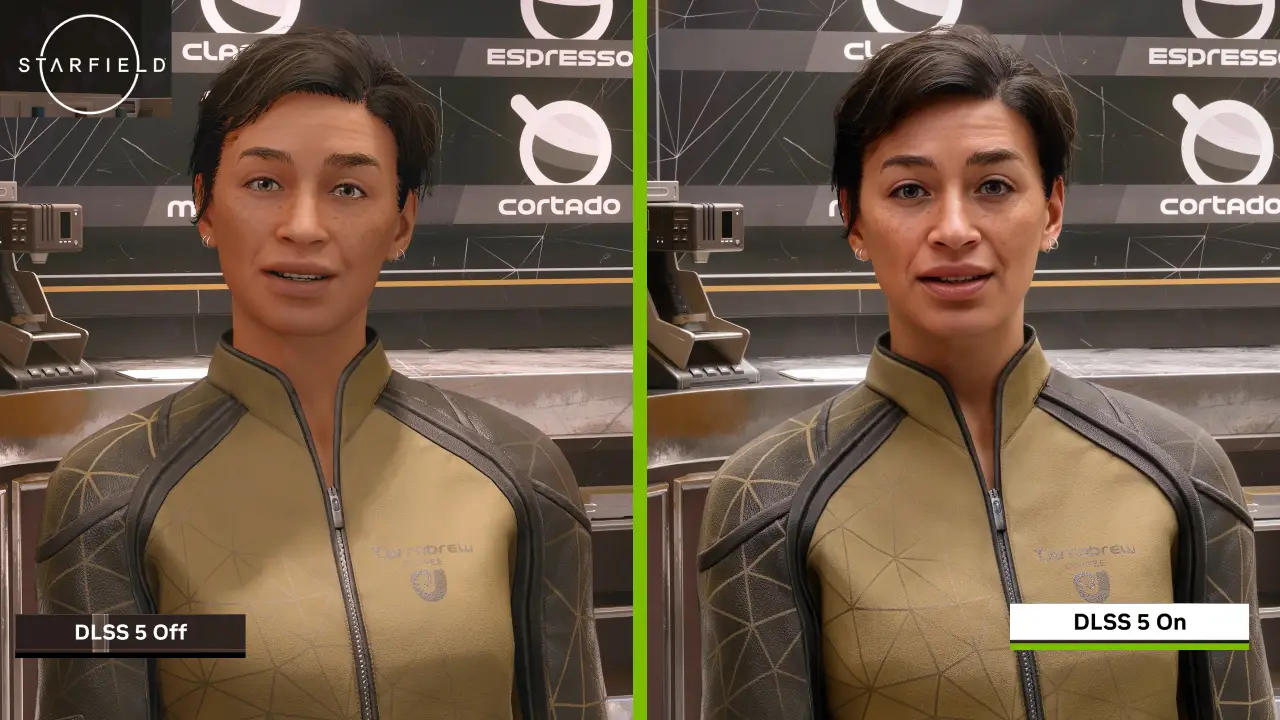
DLSS 5 takes a new direction. It is not just about speed anymore. Now the focus is on visual quality. It uses real-time AI to improve lighting and surfaces as you play. This makes scenes look more natural, and at times, closer to movies.
How DLSS 5 Actually Works
DLSS 5 uses an AI model to look at the color and movement in every frame of a game. Then it adds visual details that weren’t there before. The result is:
- Lighting that changes naturally to match the surroundings.
- Logical surface reflections that actually make sense.
- Human-like character skin textures on faces.
The AI model distinguishes between materials like skin, fabric, and hair and also reads how light behaves in a scene, whether it’s backlighting or an overcast sky. All of this runs at up to 4K resolution in real time.
Built for Developers, Not Just Gamers
Developers get a practical set of controls with DLSS 5. They adjust AI effect strength, color, intensity, and the specific areas of a scene where enhancements apply. This ensures DLSS 5 enhances a game’s style without overriding it.
The good news for studios is that they do not need to start over. DLSS 5 plugs into NVIDIA’s Streamline framework that is already in place. This is the same framework that supports older DLSS versions and NVIDIA Reflex. Studios working with those tools already have a much easier road to bringing DLSS 5 in.
Which Games Will Support DLSS 5
NVIDIA confirmed support from Bethesda, Capcom, Hotta Studio, NetEase, NCSoft, S-GAME, Tencent, Ubisoft, and Warner Bros. Games.
Titles confirmed, demonstrated, or reported to support DLSS 5 include:
- Starfield
- Hogwarts Legacy
- Assassin’s Creed Shadows
- Phantom Blade Zero
- Delta Force
- Naraka: Bladepoint
- The Elder Scrolls IV: Oblivion Remastered
- Resident Evil Requiem
- AION 2
- Black State
- CINDER CITY
- Justice
- NTE: Neverness to Everness
- Sea of Remnants
- Where Winds Meet
That list spans open-world RPGs, action adventures, competitive shooters, horror, and more. Whatever genre you play most, DLSS 5 is very likely making its way into your library.
When Does DLSS 5 Release
According to NVIDIA, DLSS 5 will roll out in Fall 2026. The company is at its GTC conference this week showing early demonstrations of the technology. Visitors can see it running live inside actual games and technical demos.
Final Thoughts
NVIDIA keeps redefining AI graphics technology, and DLSS 5 shows this best. Gaming graphics move fast in 2026. The gap between movies and real-time games closes quicker than most expect. NVIDIA leads the way.
Not every tech update is worth getting excited about. This one is different. Gamers get better visuals. Developers get more creative control. If you fall into either group, keep watching. Which game are you most excited to see DLSS 5 in?